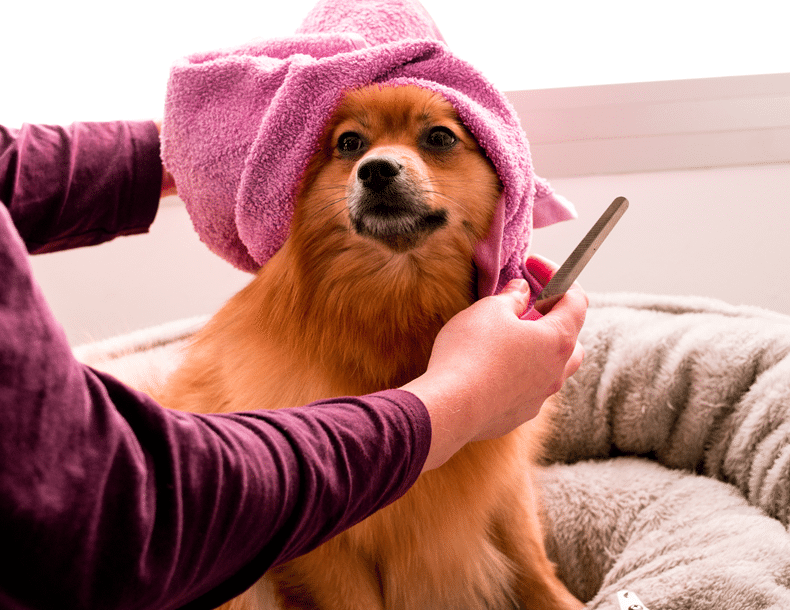
Why a Consistent Grooming Routine Matters
Grooming is often framed as a cosmetic concern — about how your pet looks, how they smell, whether they're presentable on the couch. That framing misses most of what regular grooming actually does for an animal's health.
When you brush a dog's coat, you're distributing skin oils, removing shed fur that can trap moisture and bacteria, and getting a close look at the skin underneath — which is where early signs of irritation, parasites, and infection often appear first. When you trim nails on a regular schedule, you're reducing the risk of abnormal gait patterns that develop when nails are chronically overgrown and the dog adjusts how it walks. Ear cleaning prevents the kind of wax and debris buildup that creates conditions where yeast and bacterial infections can take hold.
None of this is dramatic. It's all maintenance. And like most maintenance, the benefit accumulates over time — not in any single session, but in the pattern of care built across months and years.
For pet owners who establish grooming habits early, many health problems simply don't develop in the same way. The dog that's been handled regularly since puppyhood tolerates vet exams better, recovers from medical procedures more calmly, and is generally easier to care for in situations that require physical handling.
Coat Brushing: More Than Aesthetics
Regular brushing is the cornerstone of coat maintenance for most dogs and many cats, but the specifics vary enormously by coat type. A Labrador Retriever's short, dense double coat needs very different handling than a Poodle's curly single coat or a Border Collie's long, flowing outer layer.
For short-coated breeds, weekly brushing with a rubber curry brush or shedding mitt is usually enough to manage loose fur, stimulate the skin, and keep the coat clean between baths. These dogs don't mat, but they do shed — and regular brushing helps manage that dramatically.
Medium-length coats, including many mixed breeds, generally do well with brushing two to three times per week using a slicker brush followed by a comb to check for mats near the base of the coat. Tangles near the skin are easy to miss with surface brushing alone, and they can pull and cause pain if left to develop.
Long-coated and curly-coated dogs — Doodles, Spaniels, Shih Tzus, Yorkshire Terriers, and similar breeds — require the most diligent brushing routines. These coats mat easily, particularly behind the ears, under the collar, in the armpits, and at the base of the tail. Mats that aren't addressed early can tighten against the skin, restricting circulation and creating an environment for moisture buildup and skin irritation. Brushing daily or every other day is often necessary for these breeds.
The tool matters as much as the frequency. Using a pin brush on a curly coat tends to push mats deeper rather than remove them. A slicker brush pulls surface tangles, but a metal comb is what confirms there are no mats near the skin. For de-shedding, an undercoat rake or deshedding tool specifically designed for double-coated breeds makes a significant difference.
For cats, most domestic shorthairs manage their coats well on their own, but long-haired breeds like Persians, Maine Coons, and Ragdolls benefit greatly from regular brushing — ideally daily — to prevent the dense mats that form underneath the outer coat layer.
Bathing Frequency and Best Practices
How often a dog needs a bath depends significantly on their lifestyle, coat type, and skin condition. The old advice that dogs should be bathed as infrequently as possible because bathing strips the coat is outdated — modern pet shampoos are formulated to be gentle, and bathing more frequently with appropriate products is generally fine.
A general baseline for most dogs is every four to eight weeks. Dogs that spend a lot of time outdoors, swim regularly, or have a tendency toward skin odor may benefit from bathing more frequently. Dogs with sensitive skin or certain dermatological conditions may be on a veterinarian-directed schedule that differs from general guidelines.
Water temperature matters: warm, not hot. Hot water can irritate the skin and is uncomfortable for many dogs. Thoroughly wetting the coat before applying shampoo helps the product work more evenly. Rinse carefully — shampoo residue left in the coat can cause skin irritation that owners often attribute to the product itself, when incomplete rinsing is the actual culprit.
Drying is important. Leaving a dog partially wet, particularly in skin folds, under the collar, or in the armpit area, creates conditions where bacteria and yeast can thrive. Towel dry thoroughly, and use a dryer on a low, warm setting for thicker coats. Avoid high heat near the face and ears.
Cats generally do not require regular bathing unless they have a skin condition that warrants it, have gotten into something messy, or are unable to groom themselves due to obesity, arthritis, or another health condition. When a cat does need a bath, the process requires careful, calm handling — cats do not respond well to restraint and can injure themselves and the person bathing them when stressed.

Nail Care: The Most Overlooked Part of Grooming
Nail trimming is the grooming task most pet owners describe as the most challenging to do at home, and the one most often skipped. It's also one of the most consequential for long-term musculoskeletal health.
When nails grow too long, they change the angle at which the paw contacts the ground. The dog begins to distribute weight differently to compensate for the discomfort of nails pressing against the floor. Over months and years, this can contribute to joint stress, particularly in the toes, pasterns, and wrists. In senior dogs, nail length is one of the factors that can contribute to instability and falls.
The goal of nail trimming is to maintain a length where the nail doesn't touch the floor when the dog is standing. For most dogs, this means trimming every three to four weeks. Dogs that walk regularly on hard surfaces like concrete may naturally wear their nails down more slowly and can go slightly longer between trims.
The challenge with nail trimming at home is the quick — the blood vessel and nerve that runs through the center of the nail. In dogs with light-colored nails, you can see the quick as a pink line and trim below it. In dogs with dark nails, it's not visible, and trimming too aggressively will cause bleeding and pain. This is why many owners prefer to have a groomer or veterinarian handle nails, or to come in for nail trims between full grooming appointments.
If a dog has had a painful nail-trimming experience, they may develop a strong aversion to the process. Desensitization through positive reinforcement — offering high-value treats at each step of the process, long before scissors or clippers come out — can help rebuild tolerance over time.
Ear Cleaning and When to Take Action
Ear health is closely tied to grooming routine, particularly for dogs with floppy ears or hair that grows inside the ear canal. Breeds like Cocker Spaniels, Basset Hounds, Golden Retrievers, and many Doodle-type dogs are significantly more prone to ear infections than upright-eared breeds, in part because the ear canal doesn't get the airflow that helps keep it dry.
Regular ear cleaning — using a veterinarian-approved ear cleaning solution and cotton balls — helps remove excess wax and debris before they accumulate to the point where they create problems. The cleaning solution works by loosening debris so it can be wiped away. Never insert cotton swabs into the ear canal, as this pushes debris deeper and can damage the delicate structures inside.
Signs that warrant a veterinary visit rather than home care include: a strong, unpleasant odor from the ear, discharge that is dark brown or black, head shaking or scratching at the ear, visible redness or swelling inside the ear flap, or a dog that reacts with pain when the ear is touched. These can indicate bacterial or yeast infections that require prescription treatment.
Some groomers remove ear hair as a standard part of grooming. The value of this practice is debated among veterinarians — some believe it improves airflow, others that it can cause minor irritation that opens the door to infection. Discuss this with your vet if your dog has a history of ear problems.
Dental Hygiene and Its Connection to Grooming
Dental health isn't always framed as part of grooming, but it belongs in the same category: regular maintenance that prevents accumulation of problems over time. Periodontal disease is one of the most common health conditions in dogs over three years old, and its consequences extend beyond the mouth — chronic oral infection has been associated with changes in kidney, liver, and heart tissue.
Daily tooth brushing with a pet-safe toothpaste is the gold standard for at-home dental care. Most dogs can be trained to tolerate toothbrushing, particularly if introduced slowly with positive reinforcement. Dental chews and water additives can provide some benefit as supplements but are not substitutes for mechanical cleaning.
Professional dental cleanings under anesthesia are periodically recommended by veterinarians, and the frequency depends on the individual animal's rate of tartar accumulation and overall dental health. Regular home care significantly extends the time between professional cleanings.
Cat-Specific Grooming Considerations
Cats are largely self-grooming, and a healthy cat in good condition will handle most of its own coat maintenance. However, this doesn't mean cats don't benefit from owner involvement.
Regular combing, particularly for long-haired breeds, prevents the mats that form in areas the cat can't easily reach — under the chin, behind the ears, at the base of the tail, and in the armpit areas of the back legs. Once mats form, they are often too tight to comb out without causing pain, and shaving or cutting them out is the only option.
Nail trimming for cats helps reduce scratching damage to furniture and people, and prevents nails from curling and growing into the paw pad — something that happens more commonly in older, less active cats who don't wear their nails down through normal movement. Cat nails should be trimmed every two to three weeks for indoor cats.
Watch for changes in a cat's grooming behavior. A cat that suddenly stops grooming may be in pain or feeling unwell. A cat that begins over-grooming to the point of creating bald patches may be dealing with stress or a skin condition. Both changes warrant veterinary attention.
When Professional Grooming Fits In
Home grooming and professional grooming are complementary, not interchangeable. Home grooming handles maintenance — brushing, ear wiping, nail touches between full trims, quick rinses. Professional grooming handles the more intensive work: full coat trims, thorough deshedding treatments, breed-specific styling, and the kind of deep cleaning and drying that's hard to replicate in a home bathtub.
For many breeds, professional grooming every six to eight weeks is a practical baseline. This interval works well for Doodles, Poodles, Spaniels, Shih Tzus, and similar coat types that need regular trimming to stay manageable. Between professional visits, consistent home brushing is what prevents the mats and tangles that can turn a routine appointment into a difficult one.
A good groomer is also an additional pair of eyes on your pet's physical condition. They handle animals regularly, and they notice things. Skin changes, lumps, sore spots, ear odor, unusual coat texture — these observations, passed on to the pet owner, can lead to early veterinary detection of conditions that benefit from prompt attention.
If you're looking for grooming services in Marion or the surrounding Waupaca County area, contact us to ask about our services or schedule an appointment for your pet.
Frequently Asked Questions
How often should I brush my dog at home?
It depends on the coat type. Short-coated dogs typically do well with once or twice weekly brushing. Medium-coated dogs benefit from brushing two to three times per week. Long or curly-coated breeds generally need daily or every-other-day attention to prevent matting.
Can I use human shampoo on my dog?
It's generally not recommended. Human shampoos are formulated for human skin pH, which is different from a dog's. Regular use can strip protective oils and potentially cause irritation. Pet-specific shampoos are widely available and a better choice.
My dog's nails are black — how do I avoid cutting the quick?
Trim small amounts at a time and look at the cross-section of the nail after each cut. As you get closer to the quick, you'll notice the center of the nail begin to look lighter or moister. Stop at that point. If you're not comfortable with the process, a groomer can handle nail trims between full appointments.
Do cats need professional grooming?
Many cats don't, but some do — particularly long-haired breeds, older cats who can no longer groom themselves effectively, and cats with chronic matting issues. A groomer experienced with cats can provide services that are genuinely difficult to replicate safely at home.
At what age should I start grooming my puppy?
Begin gentle handling immediately — touching the paws, ears, and mouth so your puppy gets used to being handled there. Formal grooming appointments can typically begin around 12 to 16 weeks, after initial vaccinations are complete. Early, positive experiences make a significant difference throughout the dog's life.
Questions About Your Pet's Grooming Needs?
We're happy to talk through what's right for your specific animal before you book. Reach out to us in Marion, WI.
Contact Mid Town Grooming